Recap: \(k\)-Means Clustering
DS701 Session 4 — Wed Sep 16, 2026
What are we actually asking for?
A clustering is a grouping of data objects such that objects within a group are similar and objects in different groups are dissimilar.
So we want to:
- minimize intra-cluster distances
- maximize inter-cluster distances
And it is unsupervised — no labels go in, and any labels we put on the clusters we invent afterwards.
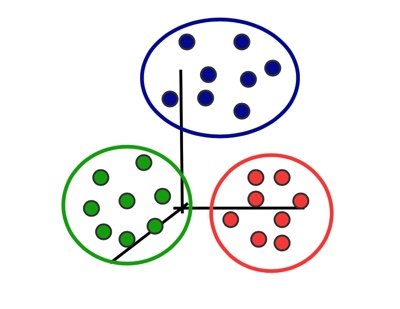
Partitional setup for \(k\)-means: data are points in \(\mathbb{R}^d\), every object belongs to one and only one cluster (mutually exclusive), the clusters cover everything (exhaustive), and \(K\) is given in advance.
Initialization matters
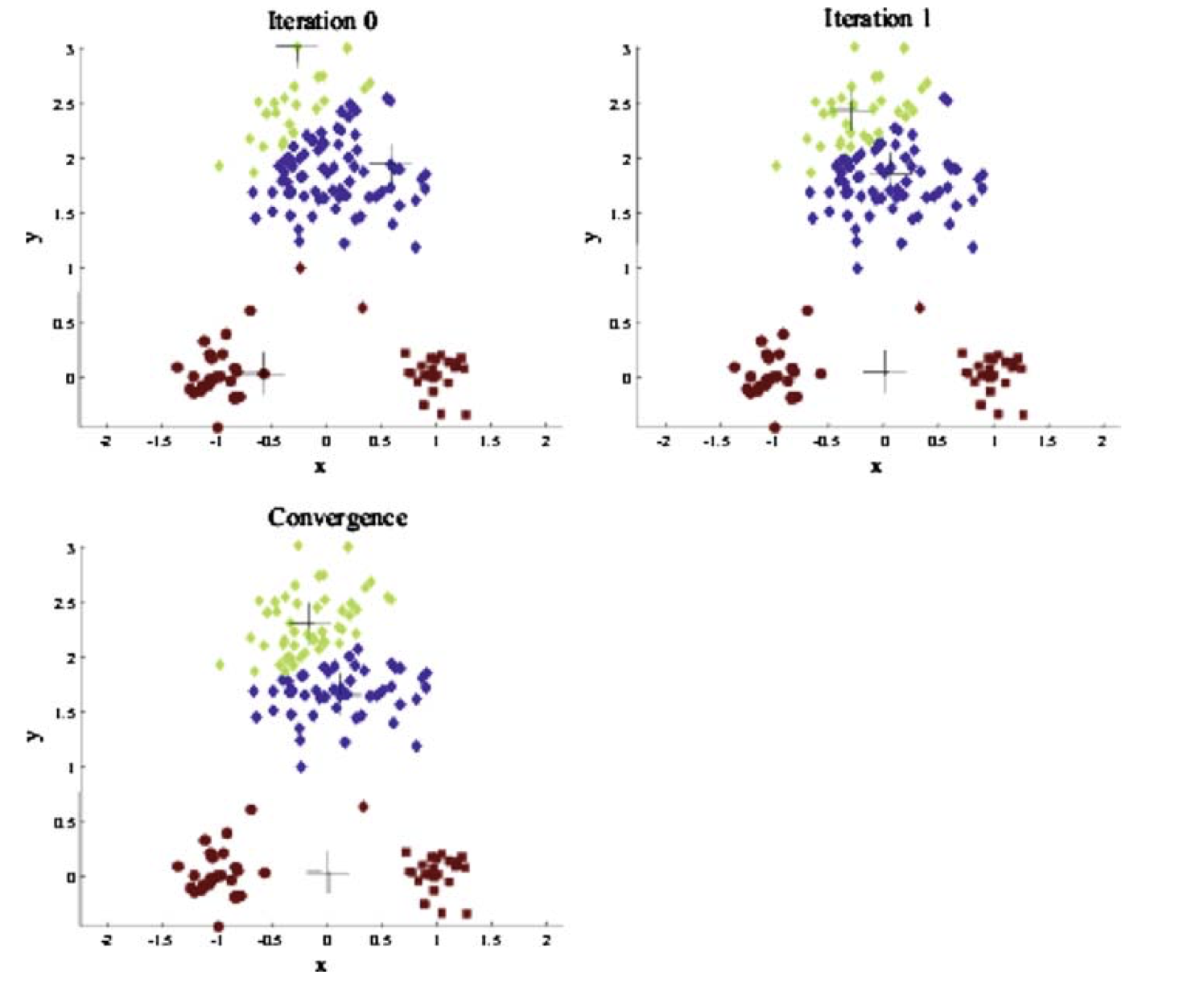
- Same data, same \(K\), different random start \(\Rightarrow\) different answer.
- A bad start gets stuck: the algorithm can never climb back out, because it never increases WCSS.
- Strategy: pick initial centers that are far apart — this is \(k\)-means++.
- It is
scikit-learn’s default, andn_initrestarts the whole thing several times and keeps the best WCSS.
Where it works well
\(k\)-means is a workhorse when the assumptions roughly hold:
- Customer segmentation — spending / order value / order count \(\rightarrow\) personas (scale first: dollars vs. counts).
- Iris — recovers the three species almost exactly; setosa is cleanly separated, versicolor/virginica overlap a little.
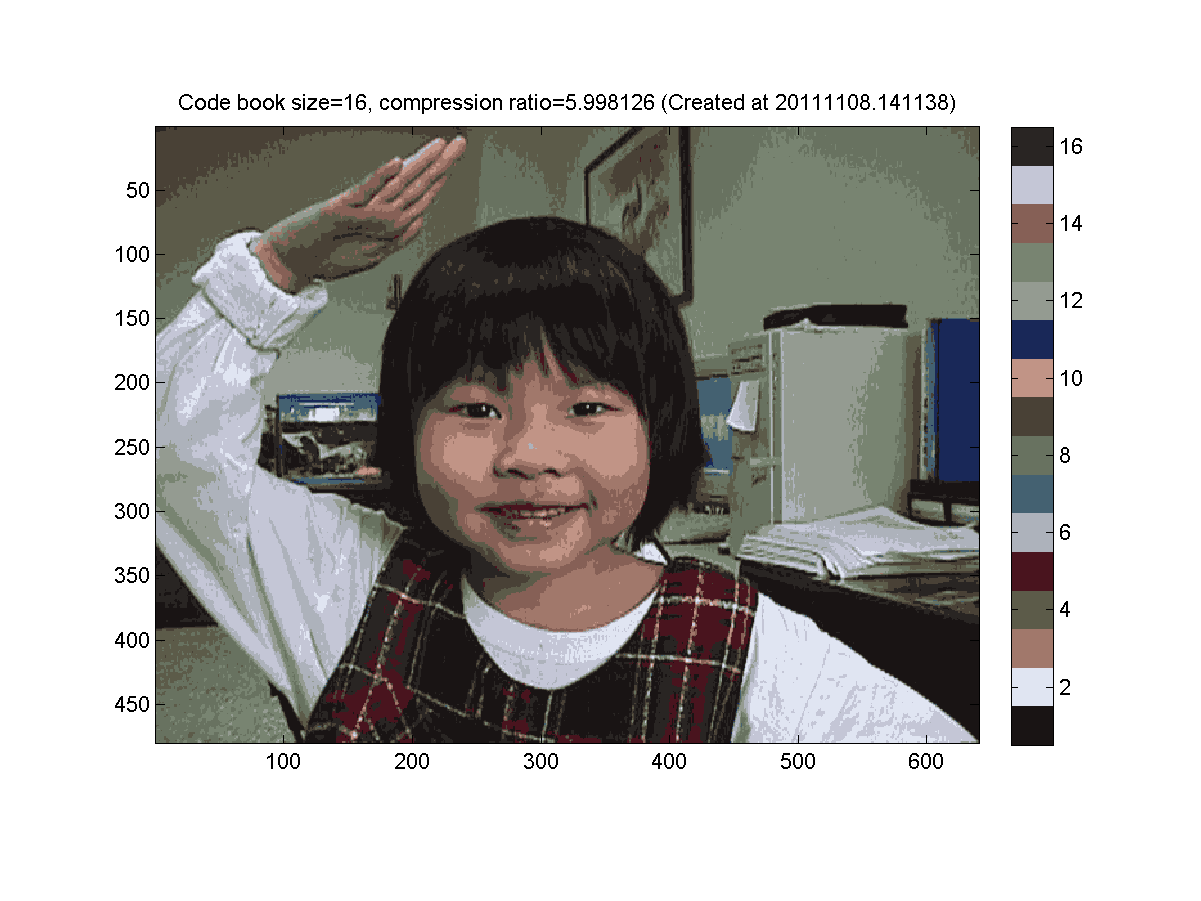
- Image compression — cluster pixels in \((R,G,B)\) space, replace each pixel with its centroid. \(k=16\) means a 4-bit palette index instead of 24 bits: \(24/4 = 6\times\).

Activity: \(k\)-Means from scratch and in scikit-learn
Goal: implement one Lloyd’s iteration yourself, check it against sklearn.cluster.KMeans, then the stretch — sweep \(k\), and settle a case where the elbow is not clear — and finally break \(k\)-means on purpose and diagnose why.
- Work in groups of 2–3.
- Parts marked (autograded) are submitted to Gradescope; the rest is participation.
- Staff will circulate — be ready to explain any part of your work.
- Dependencies:
numpy,matplotlib,scikit-learnonly.


The activity notebook goes live on the day of the lecture. Colab is optional — you can also open it on GitHub and run it locally.